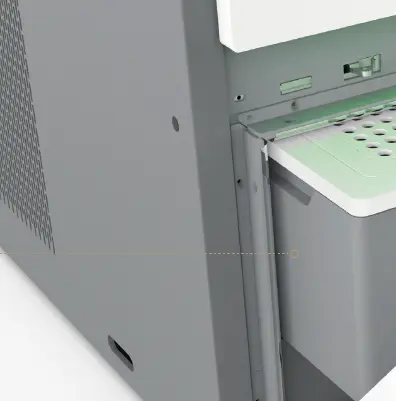
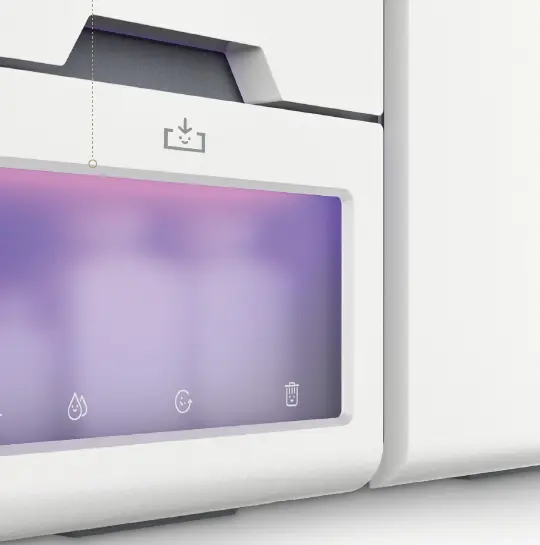

The Lunarion®
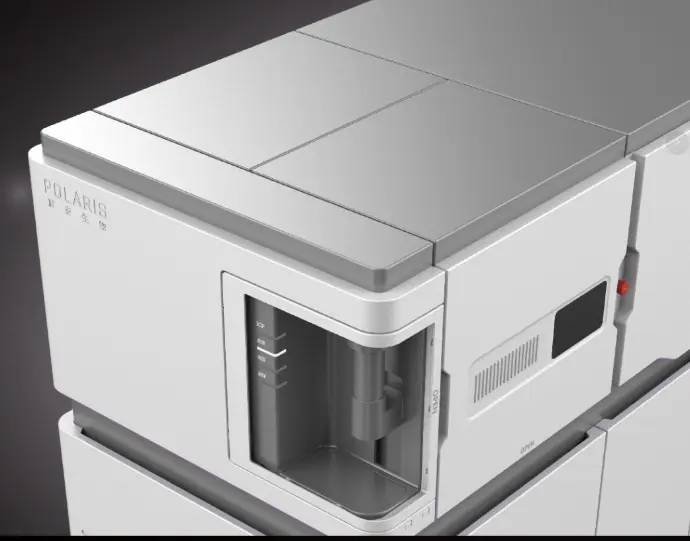
Specifications
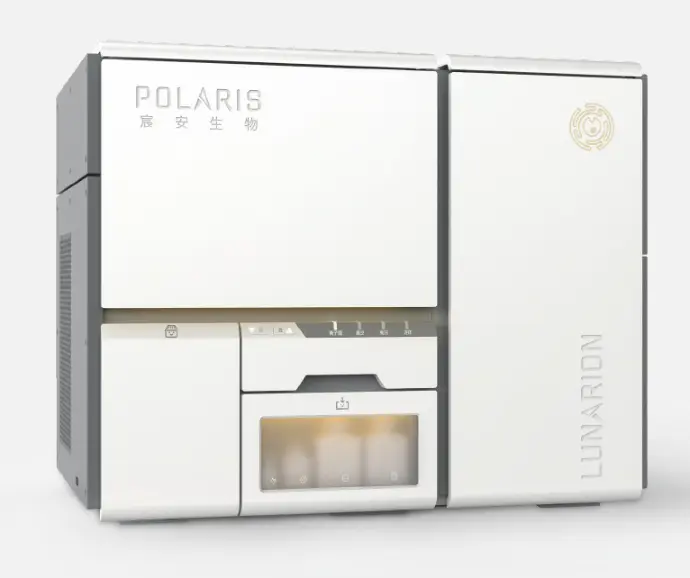
Dimensions (LxWxH) | 1243 mm x 752 mm x 992 mm |
Weight | 360 kg |
Resolution | 800-1200 |
Sample Introduction | Automatic |
Sample Size | 30 uL - 4.5 mL |
Flow Rate | 80 uL/min |
Average Event Rate | 500-1,000 cells/s |
Maximum Event Rate | 2,000 cells/s |
Calibration | Automatic |
Dynamic Range | 4.5 Orders of Magnitude |
Channels | 141 |
Mass Range | 70-210 amu |
Replicate Sample CV | <2% |
TOF Pulser Frequency | > 125KHz |
ADC Conversion Rate | > 2Gs/s |
Operating System | Windows |
UI Language | English, Chinese |
Polaris Biology Mass Cytometry Panels
Immune-Oncology Panels
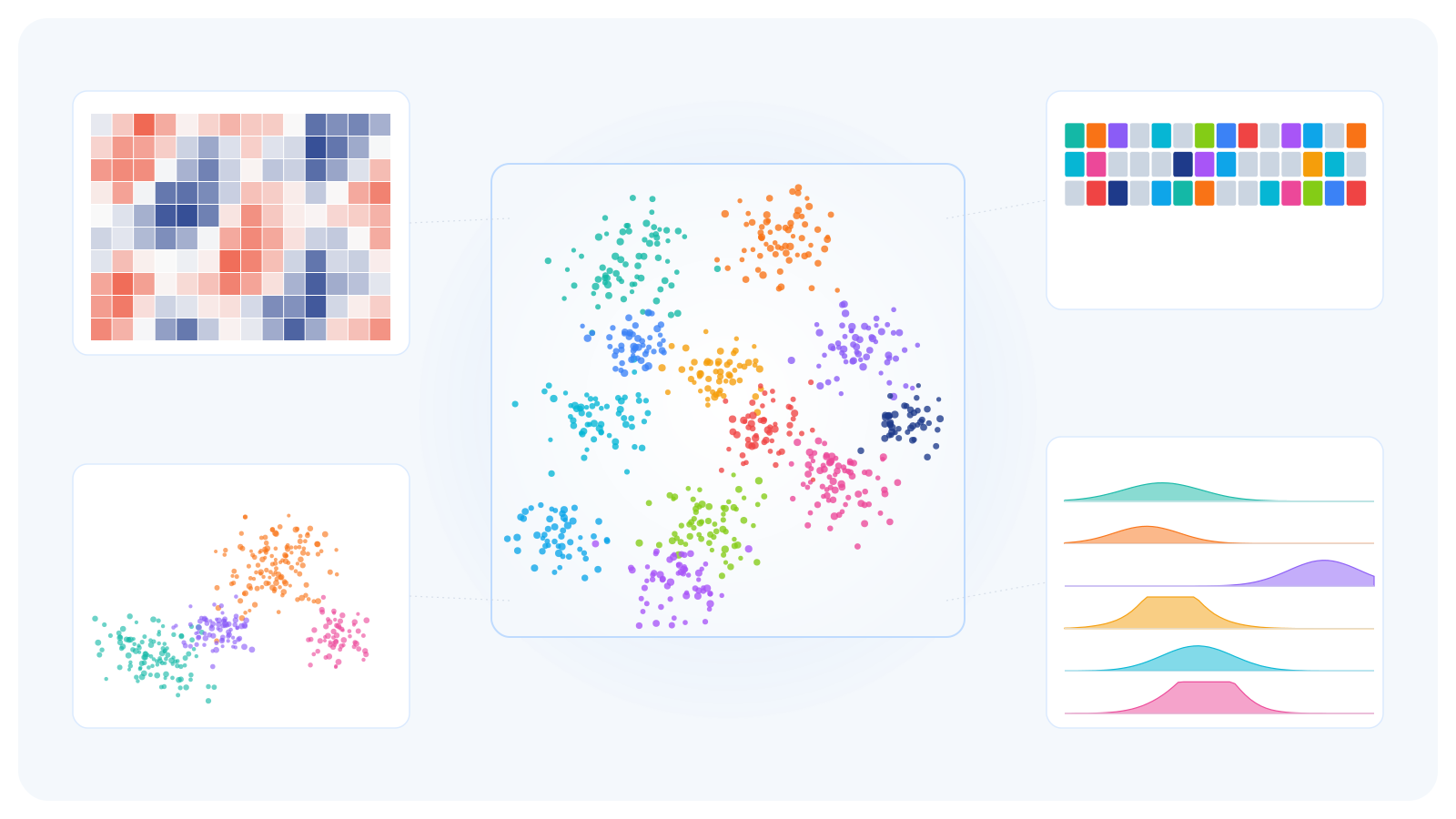
The Polaris Biology Immune-Oncology Panels are developed to support advanced tumour immunology and immunotherapy research through simultaneous profiling of immune checkpoint molecules, activation markers, suppressive immune populations, and tumour-associated immune phenotypes. These panels allow researchers to investigate immune exhaustion, checkpoint regulation, CAR-T responses, T cell functionality, and tumour microenvironment dynamics with minimal signal spillover and high multiplexing capability. Suitable for both human and mouse studies, the panels accelerate biomarker discovery, translational oncology research, and immunotherapy development workflows.
Available Panels
- Human Immune-Oncology Panel (35-marker)
- Mouse Immune-Oncology Panel (27-marker)
Immune Landscape Phenotyping Panels
Polaris Biology Immune Landscape Phenotyping Panels are designed for comprehensive high-dimensional immune profiling across human and mouse research models. These validated mass cytometry panels enable deep characterization of lymphoid and myeloid populations, immune activation states, memory phenotypes, exhaustion markers, and functional immune heterogeneity in a single experiment. Optimized for the Lunarion Mass Cytometry System, the panels support streamlined workflows for PBMC analysis, translational immunology, tumour microenvironment studies, infectious disease research, and systems immunology applications.
Available Panels
- Human Immune Landscape Phenotyping Panel (30-marker)
- Mouse Immune Landscape Phenotyping Panel (31-marker)
Application-Focused Mass Cytometry Panels
Beyond core immunophenotyping workflows, Polaris Biology also offers a growing portfolio of application-focused mass cytometry panels tailored for specific disease areas and translational research applications. These ready-to-use solutions are optimized for tumour microenvironment profiling, CAR-T characterization, infectious disease research, autoimmunity, and organ-specific immune landscape analysis across both human and mouse models.
Featured Application Panels
- Human Lung Cancer Lymphocyte Phenotyping Solution
- Human Lung Cancer Myeloid Cell Phenotyping Solution
- Human Breast Cancer Immunophenotyping Solution
- Human Breast TME Immunophenotyping Solution
- Human Colorectal Cancer Immunophenotyping Solution
- Human Colorectal TME Immunophenotyping Solution
- Human Kidney Cancer Lymphocyte Phenotyping Solution
- Human Kidney Cancer Myeloid Cell Phenotyping Solution
- Human Hepatic Cancer Immunophenotyping Solution
- Human CAR-T Phenotyping Landscape Solution
- Human CAR-T Functional Landscape Solution
- Human Infectious Immunology Solution
- Human Autoimmunology Solution
- Mouse PBMC Phenotyping Solution
- Mouse Sp/LN Phenotyping Landscape Solution