Western blotting is evolving. In Part I of this series, we examined how modern workflows compress a traditional 16-hour protocol into a single workday. Speed, however, is only one dimension of performance. Increasingly, journals require Western blot data to demonstrate quantitative accuracy, linearity, reproducibility, and transparency. Methodological reviews now emphasise that Western blotting should be approached as a quantitative assay rather than a purely qualitative technique [1,2]. In this continuation, we examine the scientific principles that transform a rapid blot into a rigorous, publication-ready experiment.
1. Optimising Signal Linearity
Accurate Western blot quantitation depends heavily on whether the detected signal remains within the linear dynamic range of the imaging system. Degasperi et al. showed in a widely cited 2014 analysis that Western blot signals saturate much earlier than most labs expect, often compressing fold-change differences even before visual saturation is apparent [1]. This means that two samples may appear similar simply because both signals have hit the maximum detection threshold.
Practical recommendation:
For each new target, perform a load titration (e.g., 5–40 µg) to map its linear region. Maintain exposure times that keep signals well within this zone, and always save raw, unsaturated images before contrast adjustments. This single calibration step improves reproducibility and insulates your data from reviewer challenges about saturation.
2. Choosing the Right Normalisation Strategy
Housekeeping Proteins vs Total Protein
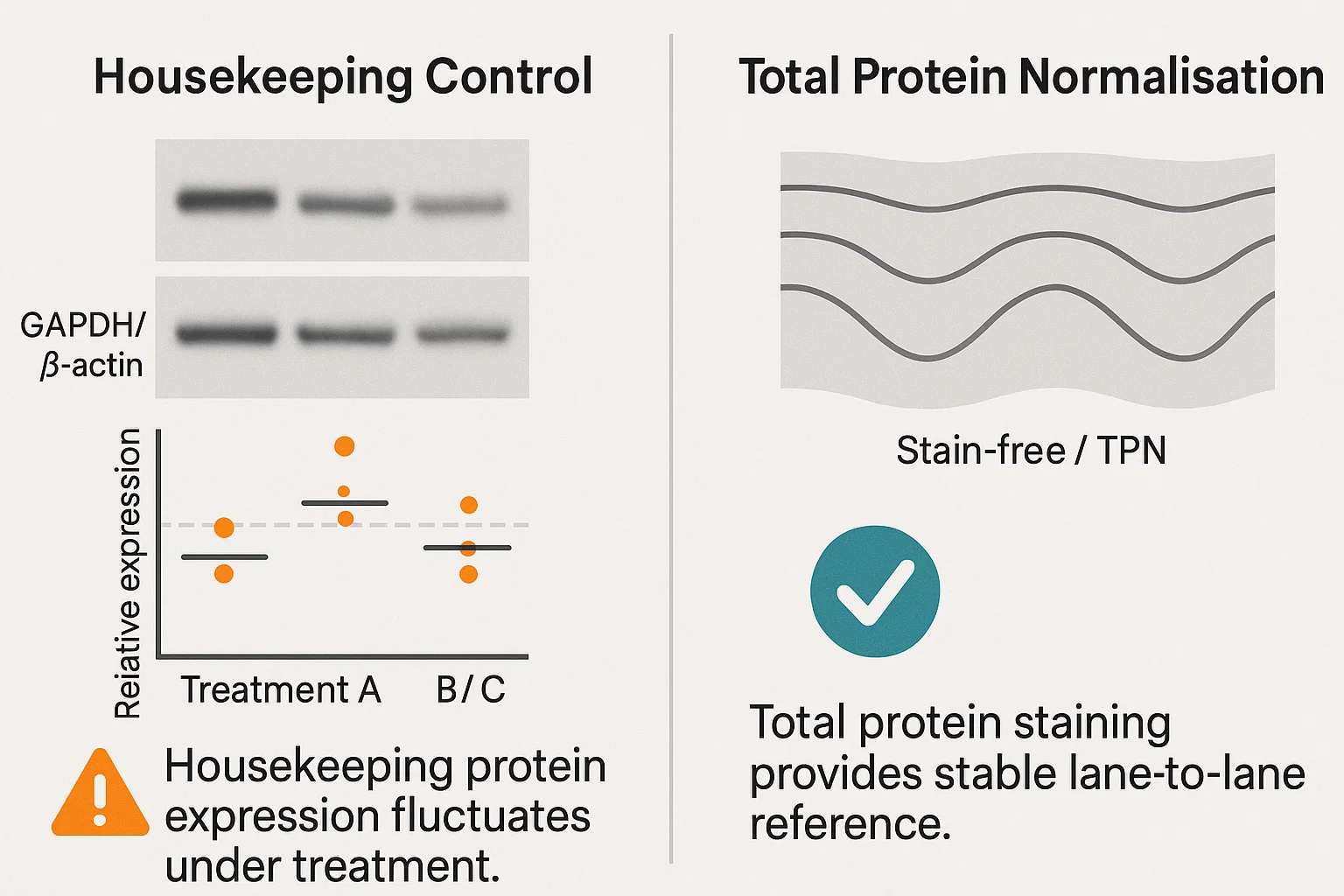
Historically, Western blots relied on housekeeping proteins such as GAPDH, β-actin or tubulin for normalisation. However, a growing body of literature demonstrates that housekeeping proteins are not stable across experimental conditions, varying with treatment, stress signalling, cell cycle stage and metabolic changes [3,4]. These fluctuations can introduce substantial quantitation errors.
Total Protein Normalisation (TPN) has therefore become the modern standard in many research areas. TPN uses the overall protein content of each lane as the reference signal, avoiding the biological variability inherent in housekeeping proteins. Multiple comparative studies show that TPN yields lower variability, a wider linear range, and greater reproducibility across tissues and treatments [3,5].
Practical recommendation:
If your laboratory still normalises using housekeeping proteins, run a simple comparison study between housekeeping and TPN under your experimental conditions. In many cases, TPN offers stronger methodological defensibility for publication.
3. Considering Fluorescent and Multiplex Detection
Chemiluminescence remains widely used, but fluorescent Western blotting is gaining traction for quantitative applications. Peer-reviewed evaluations show that fluorescence provides:
- a broader linear dynamic range (up to 10⁴ vs 10²–10³ for ECL)
- stable, non-decaying signal
- true multiplexing, enabling simultaneous detection of multiple proteins in a single lane
-
improved quantitation of phosphorylated vs total targets
These advantages have been demonstrated across several independent benchmark studies [5,6].
Multiplex detection is particularly valuable when sample quantity is limited or when comparing pathway components that need to be analysed together to avoid gel-to-gel variability.
4. Transfer Efficiency and High-Molecular-Weight Proteins
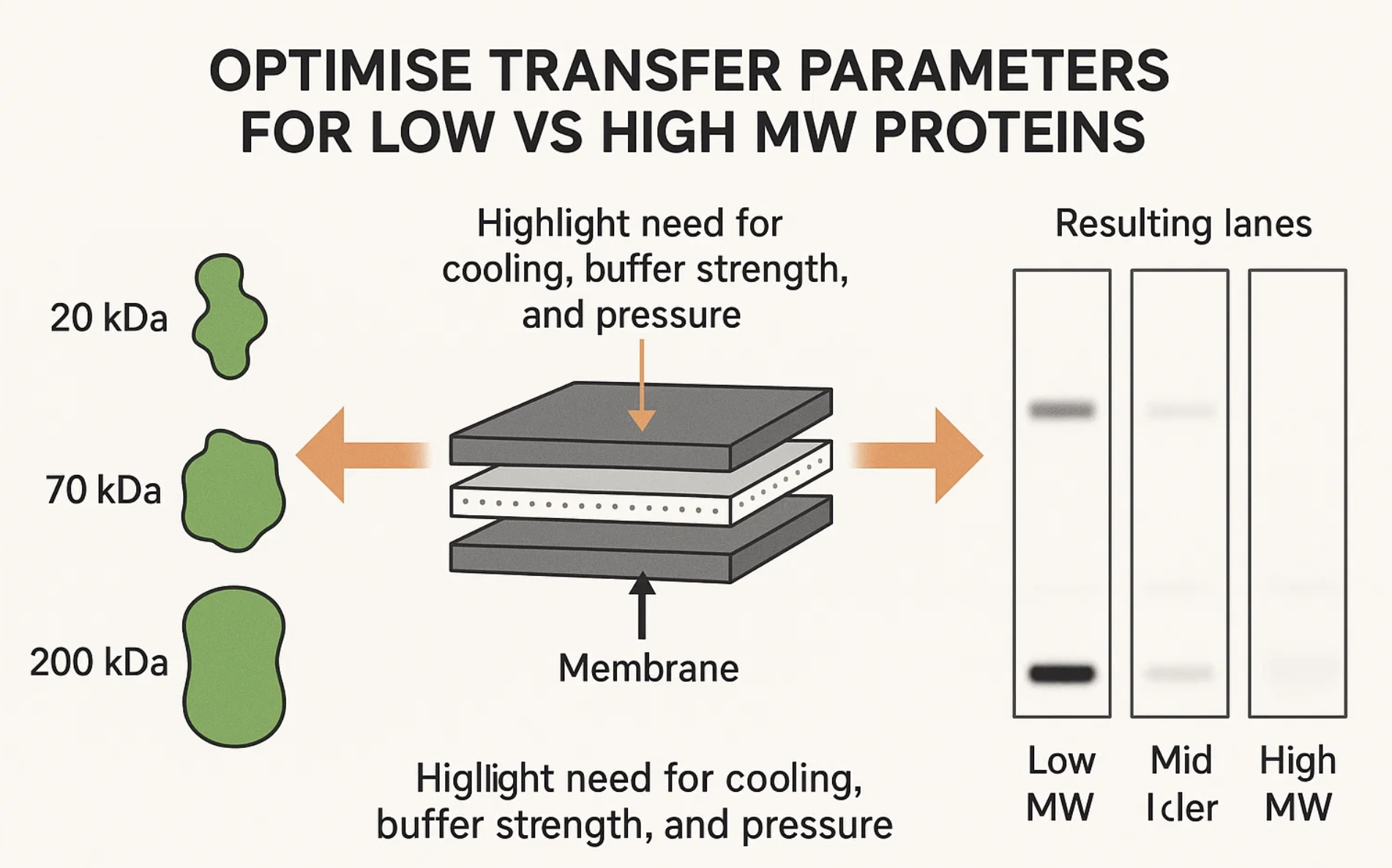
Although faster transfer methods improve workflow speed, transfer quality remains a pivotal factor in data accuracy. High-MW proteins often require optimised current, cooling and buffer conditions to avoid under-transfer or “blow-through”. Literature examining transfer methods highlights that inconsistent heat removal, stack pressure and buffer ion strength remain major contributors to blot variability [7].
Practical recommendation:
- Use gradient gels when MW is unknown
- Standardise transfer buffer preparation and cooling
- Validate transfer conditions using a pre-stained ladder before proceeding to antibody incubation
5. Automation: Reducing Human Variability
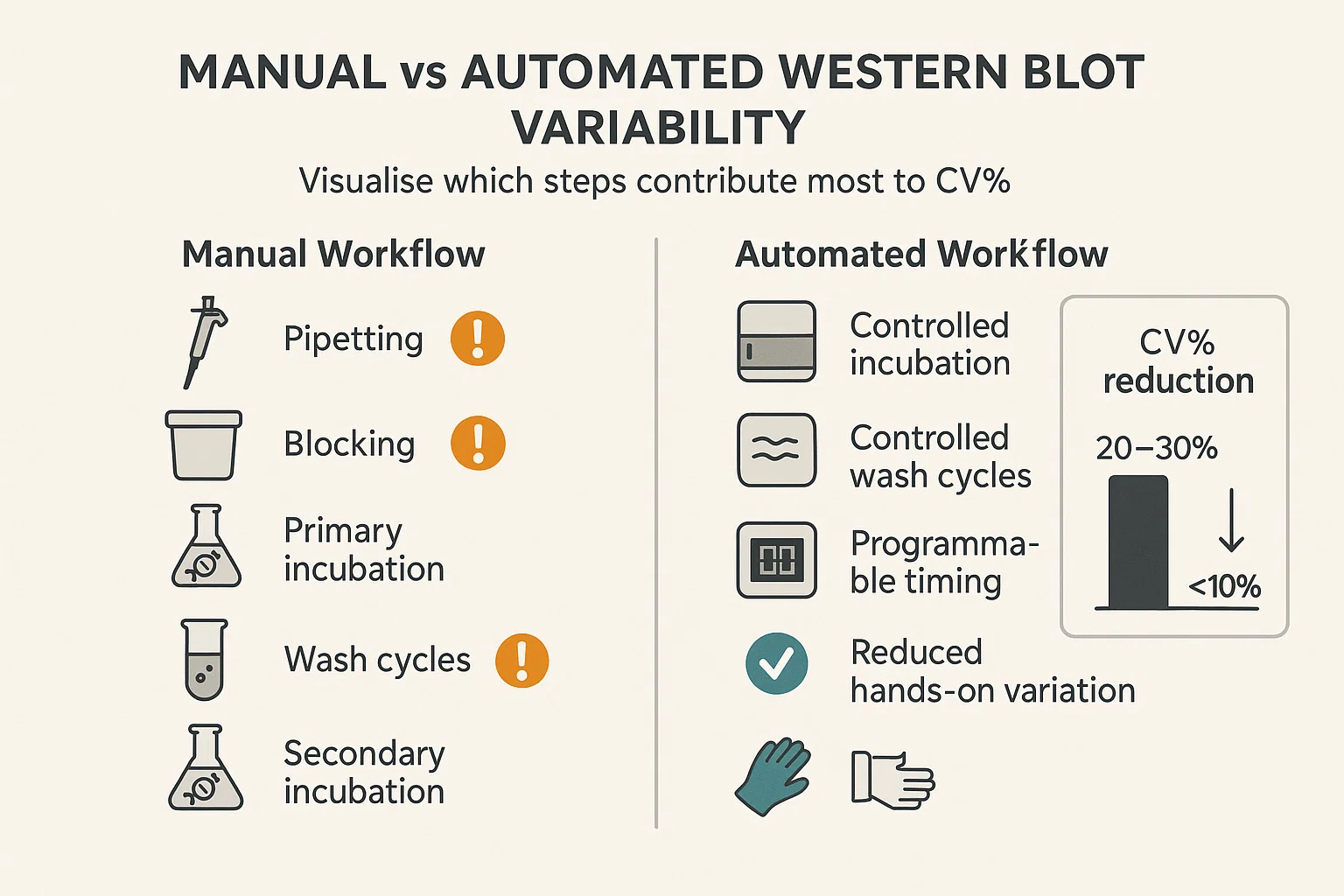
Automation is often adopted for convenience, but its strongest scientific advantage is improved reproducibility. Comparative studies evaluating automated immunoblotting platforms report:
- reduced inter-operator variability
- more consistent incubation timing
- lower antibody consumption
-
improved blot-to-blot reproducibility
These benefits are well documented across independent method papers [6,7].
Automation is particularly impactful in shared facilities, high-throughput labs and clinical-adjacent research where consistency matters as much as speed.
6. Meeting Modern Reporting Standards
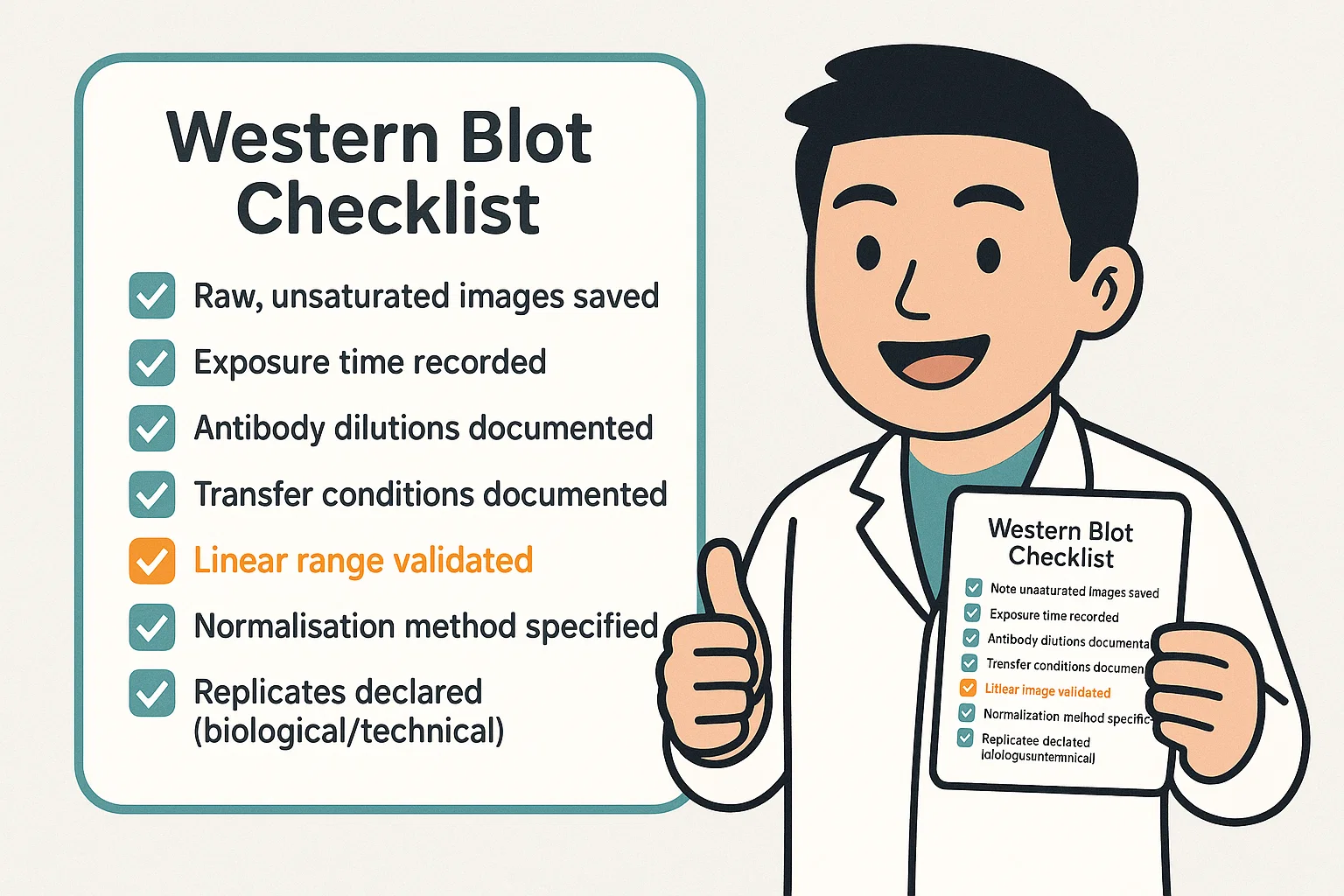
Journals now increasingly require clear documentation of:
- raw, unsaturated images
- exposure settings
- antibody dilutions and incubation times
- biological vs technical replicates
- linear range determination
-
normalisation approach
These transparency requirements stem from guidelines highlighted by Pillai-Kastoori et al. and others advocating for reproducible quantitative Western blotting [2].
Designing your protocol with these requirements in mind from the outset improves the chance of smooth peer review and prevents unnecessary re-experimentation.
Conclusion
As Western blotting evolves, the focus is shifting from performing blots faster to performing them better. By integrating linearity testing, adopting robust normalisation strategies, considering multiplex detection, optimising transfer quality and reducing operator variability, researchers can significantly improve the quantitative strength of their data. These refinements align Western blotting with modern expectations of transparency, reproducibility and methodological rigour. Our technical team remains available to help labs refine their workflows or troubleshoot specific Western blot challenges, using current best practices and literature-anchored guidance.
References
- Degasperi A., et al. Evaluating the Impact of Signal Saturation on Western Blot Quantitation. Scientific Reports (2014).
- Pillai-Kastoori L., et al. Reproducibility in Quantitative Western Blot Methods: Considerations and Improvements. Journal of Biological Chemistry (2020).
- Taylor S.C., Posch A. The Design and Analysis of Quantitative Western Blotting—A Literature Review. Biochemistry and Cell Biology (2014).
- Ferguson R.E., et al. Housekeeping Proteins: Challenging Their Stability in Quantitative Western Blotting. Analytical Biochemistry (2021).
- Gürtler A., et al. Stain-Free Technology as a Normalisation Tool for Western Blot Analysis. Journal of Proteome Research (2013).
- Gilda J.E., Gomes A.V. Stain-Free Total Protein Normalisation for Accurate Quantitation of Western Blots. Journal of Visualized Experiments (2013).
- Gassmann M., et al. Improving Reproducibility of Immunoblotting Through Controlled Incubation and Wash Conditions. Methods (2009).